Every trade business owner knows the frustration of an uncommitted calendar hold: a homeowner confirms a scheduled installation over the phone, but texts an hour before arrival on Monday morning saying they decided to postpone. The crew sits idle, equipment remains on the truck, and the lost billable hours cannot be recovered.
Matching deposit requirements to the job type#
A blanket deposit policy can deter callers if applied clumsily. Instead, match your payment requirement to the operational risk of each visit:
- Diagnostic Service Calls ($89–$149): Collect or authorize the diagnostic fee at booking. Clearly state that this fee reserves the technician’s arrival window and can be credited toward approved repairs.
- Minor Repairs ($250–$1,000): Collect a card on file during scheduling. Pre-authorize a nominal scheduling hold ($50) or authorize the card without charging it until the technician completes the work walkthrough.
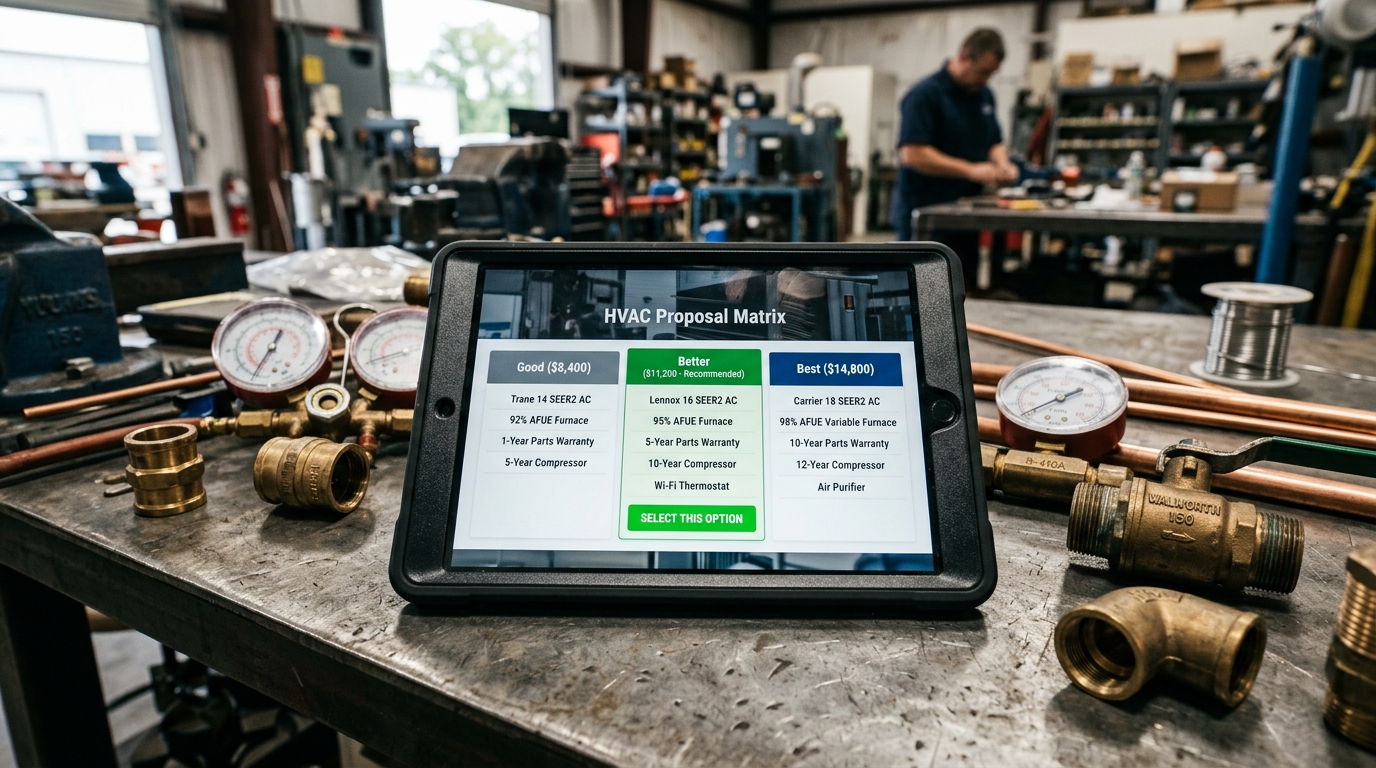
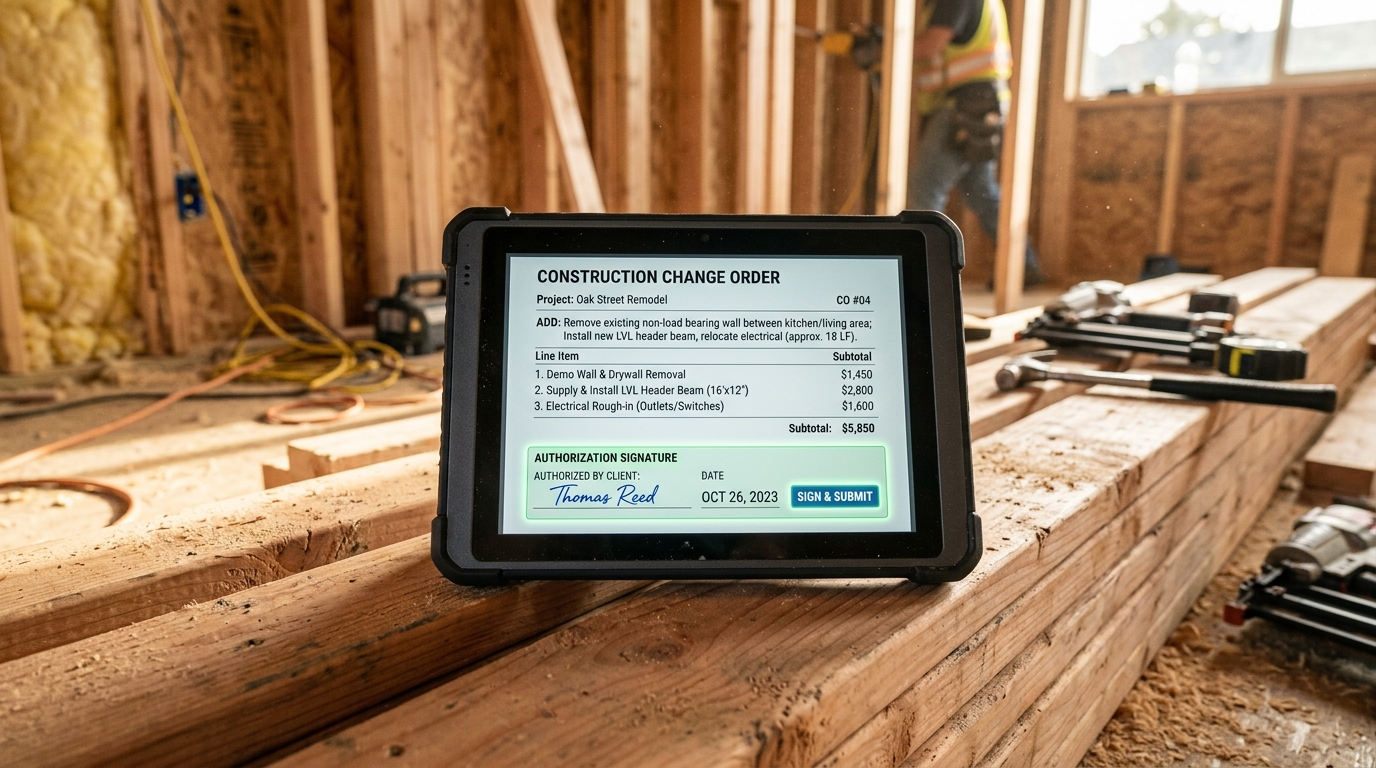
- Major Installations & Replacements ($2,500+): Require a milestone deposit (such as 20% to 33% upon signing) before ordering custom equipment or allocating full-day crew capacity. Always verify state-specific limits: for example, California law caps home improvement down payments at 10% of the contract price or $1,000, whichever is less.
Understanding payment timing: Authorization, capture, and bank payouts#
When moving from paper checks to digital processing, contractors sometimes assume card payments equal immediate cash in the bank. In modern payment processors like Stripe, these are distinct events:
- Authorization: Validates the card and holds the required amount without charging it immediately. Useful for diagnostic appointments where the final repair cost is unknown.
- Capture & Settlement: The card is officially charged upon digital sign-off. Funds settle through card networks into your payment processing balance.
- Bank Payout: Processed funds transfer to your business checking account according to your payout schedule (typically rolling 2 business days). Digital payments dramatically reduce collection friction, but settlement timing must still be reflected in your weekly cash flow planning.
A transparent customer cancellation policy template#
Sample Customer Booking Notice
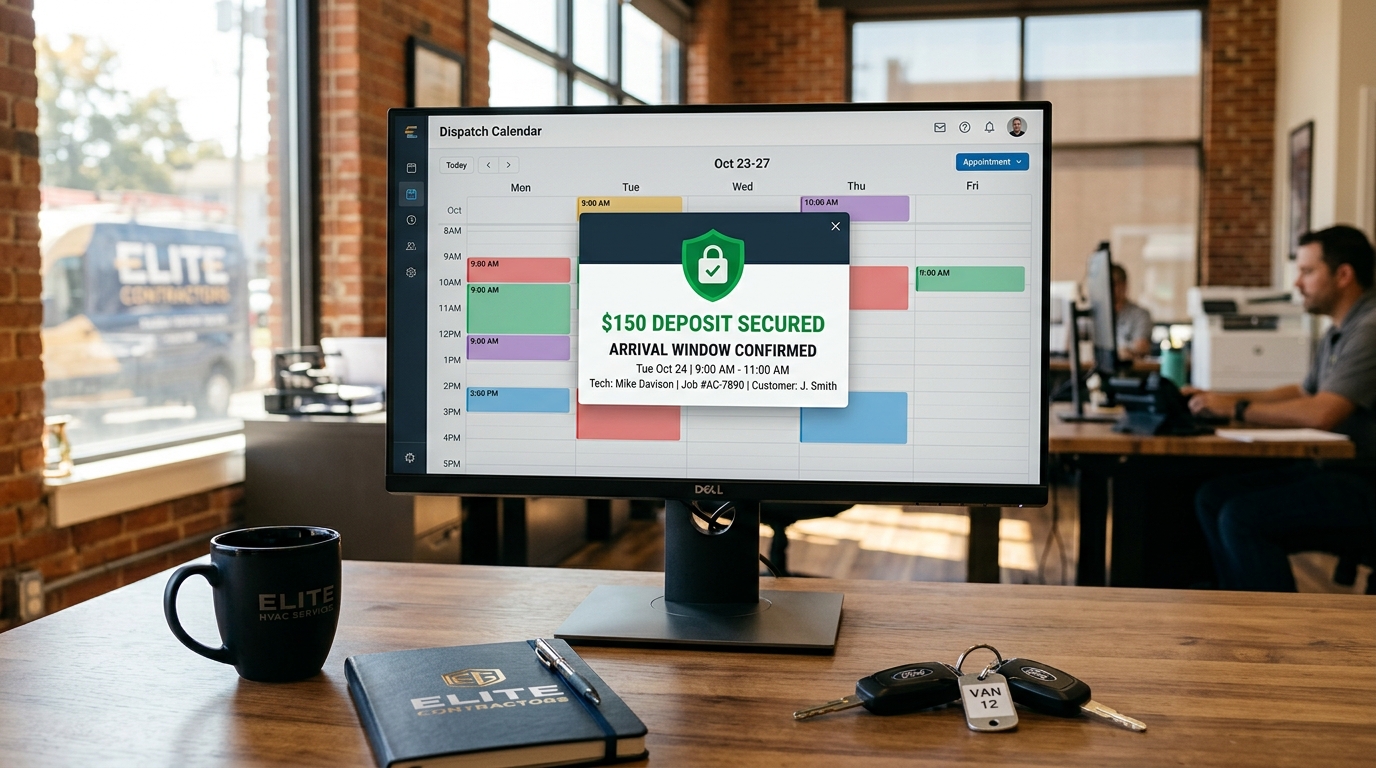
“Your installation appointment is reserved for Thursday, October 15 between 8:00 AM and 10:00 AM. To confirm this crew window, please submit your $150 scheduling deposit at the secure link below. Cancellations made with at least 24 hours notice are 100% refundable. Cancellations within 24 hours forfeit the deposit to cover technician dispatch allocation.”
Let’s Get Quoted links calendar dispatch directly with Stripe card-on-file tokenization. Customers confirm their appointment window by submitting their deposit online, protecting your schedule while keeping communication professional and transparent.