When an unexpected plumbing leak or AC failure occurs, homeowners want to speak with a human or receive immediate acknowledgment. If a phone rings to an unmonitored voicemail, many callers simply hang up and dial the next local contractor on Google Maps. However, answering every incoming call while pulling wire or operating machinery is dangerous and impractical.
A transparent scenario model: Measuring the financial impact#
Software vendors often advertise dramatic revenue recoveries without showing the underlying funnel. To understand the realistic financial impact of an answering solution, examine an illustrative monthly scenario based on conservative conversion rates:
Illustrative Scenario: Answering Funnel Math
Consider an active residential contractor who misses 20 inbound calls in a month. Assume half (10) are legitimate new project inquiries (the remainder being vendor solicitations, spam, or existing project status checks). If an automated triage workflow successfully engages 60% of those inquiries (6 engaged callers) and your sales process converts 30% of engaged inquiries into completed jobs, the model yields 1.8 additional won jobs. At an average collected invoice of $1,500, this produces $2,700 in gross revenue. At a 35% contribution margin before the answering expense, it generates $945 toward overhead and software tools. These figures are illustrative assumptions rather than universal performance guarantees; actual results depend on local market demand and available crew capacity.
What an AI phone agent handles effectively#
Modern conversational AI is not a generic chatbot. When properly configured for residential service trades, it performs four essential front-desk tasks:
- Inbound Call Capture & Transcription: Answers on ring one, transcribing the customer’s issue and contact information cleanly into your CRM.
- Structured Scoping: Inquires about equipment age, brand, problem severity, and specific symptoms (e.g. “Is the water heater leaking from the tank bottom or the top fittings?”).
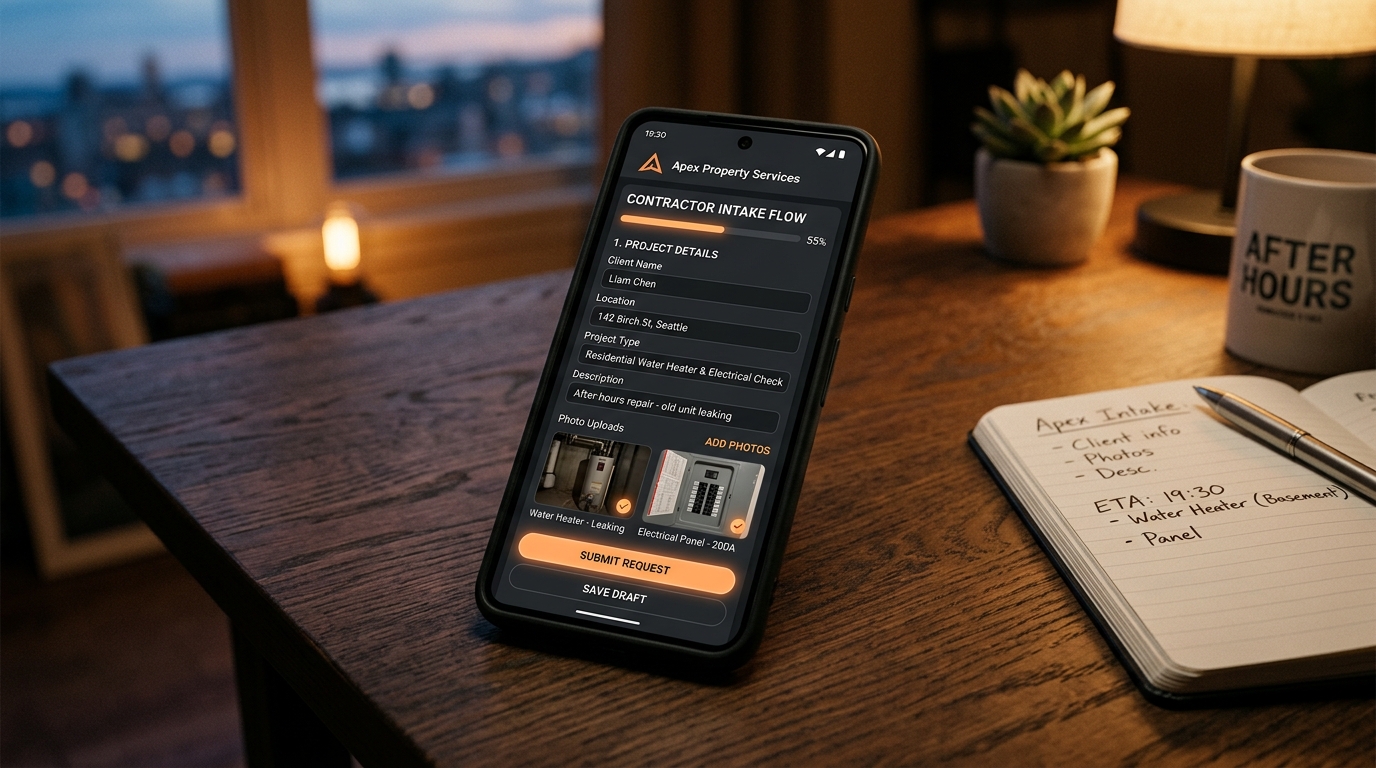
- Automated SMS Follow-Up: Texts the caller an immediate link to submit job photos or select an arrival window while the dispatcher is in the field.
- Spam & Vendor Filtering: Screens out cold sales calls and robo-dialers so your personal phone only alerts you for genuine homeowner opportunities.
Sample call transcript: Emergency triage vs. standard booking#
Sample Triage Interaction
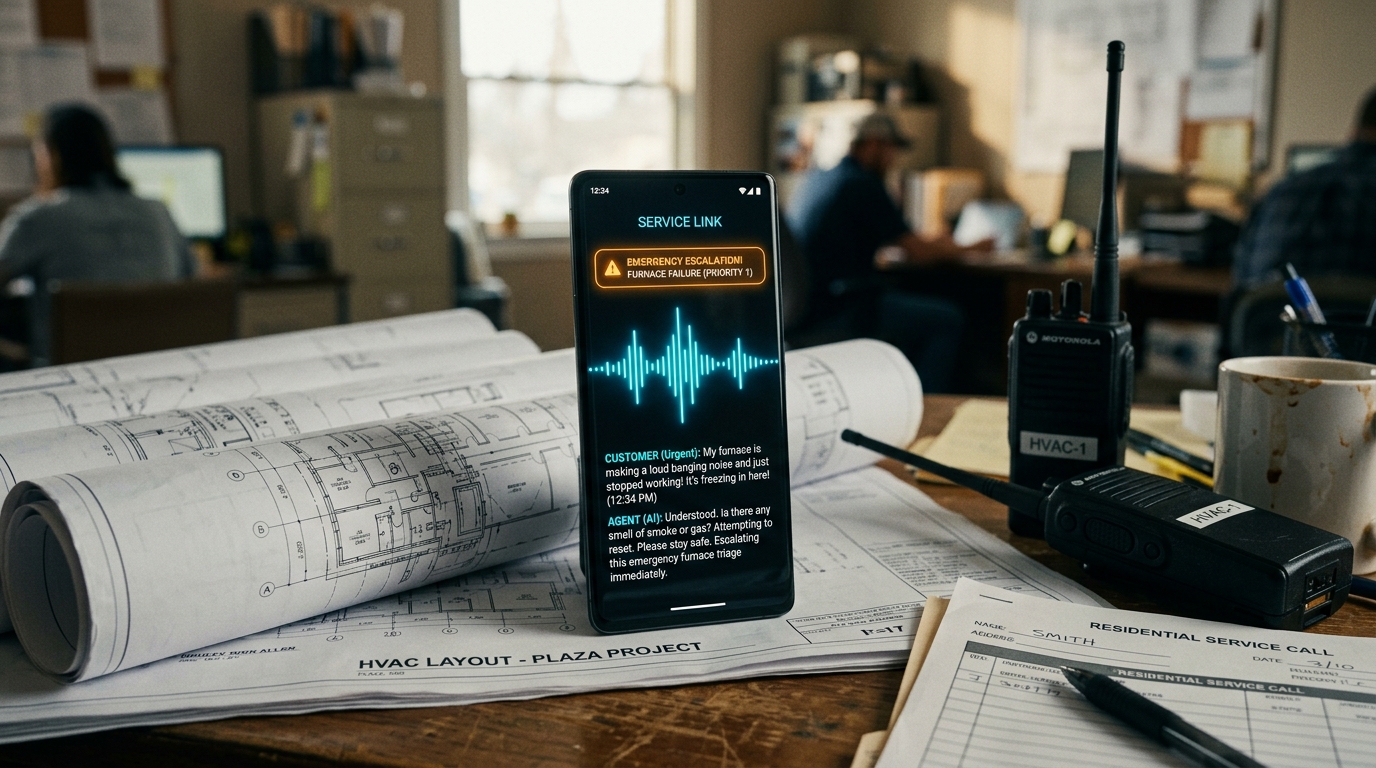
Caller: “Hi, water is spraying under my kitchen sink and I can’t get the shutoff valve to turn.” AI Agent: “I understand this is an active emergency, David. First, please locate your main house shutoff valve, typically where the main water pipe enters near your water heater or front hose bib. I am immediately alerting our on-call technician, Marcus, to call your cell phone right now. What is your home address?”
Non-negotiable human escalation rules#
An AI assistant should never attempt to handle every scenario autonomously. Establish strict rules where the system must transfer the call directly to an on-call manager or flag an immediate mobile alert:
- Immediate Safety & Property Hazards: Any mention of active flooding, gas odors, burning electrical smells, or sparks.
- Warranty & Customer Escalations: Existing clients expressing frustration regarding an open job or billing concern require human empathy and management resolution.
- Commercial or Multi-Unit Scopes: High-liability commercial properties requiring specialized insurance and formal bidding processes.
Let’s Get Quoted includes configurable AI phone reception that operates within strict trade guardrails, ensuring urgent calls reach your phone immediately while routine inquiries are scoped and scheduled cleanly.